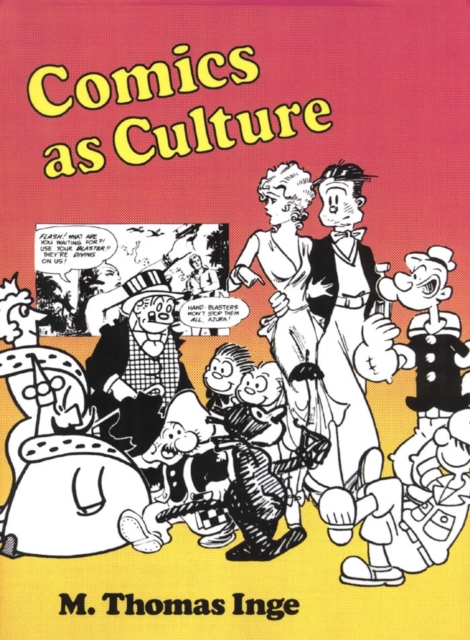
Comics As Culture
(Autor) M.Thomas IngeComics and cartoons are ingrained in American life. One critic has called comic books "crude, unimaginative, banal, vulgar, ultimately corrupting." They have been regarded with considerable suspicion by parents, educators, psychiatrists, and moral reformers. They have been investigated by governmental committees and subjected to severe censorship. Yet more than 200 million copies are sold annually. Upon even casual examination BLONDIE, ARCHIE, MARY WORTH, THE WIZARD OF ID, and SHOE--among the many comic strips--will be found to support some commonly accepted notion or standard of society. Why do comics both amuse and arouse controversy? Here is an attempt at an answer in a sharp-eyed comic-book lover's probing look at this step-child genre. He finds comics both loved and hated, relished and sneered at. In their relying on dramatic conventions of character, dialogue, scene, gesture, compressed time, and stage devices, he finds the comics close to the drama but probably closer kin to the movies.
M.Thomas Inge
M. Thomas Inge is a renowned American literary scholar and critic known for his groundbreaking work on Southern literature. His most famous book, "Southern Literature: The Contemporary Period", delves deep into the complexities of Southern culture and identity. Inge's insightful analysis and keen observations have greatly enriched the field of literature.
Other related