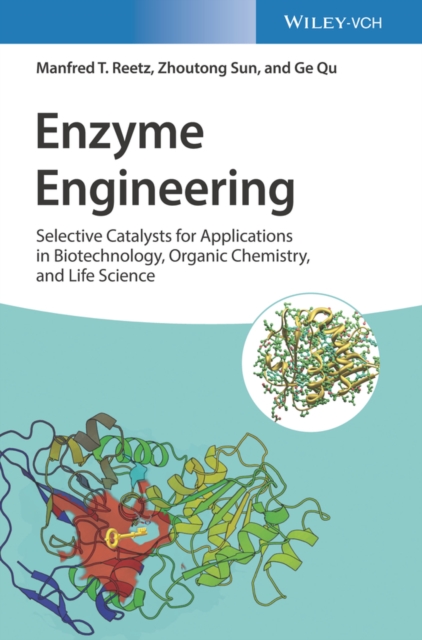
Enzyme Engineering
Selective Catalysts for Applications in Biotechnology, Organic Chemistry, and Life Science
(Author) Manfred T. ReetzEnzyme Engineering An authoritative and up-to-date discussion of enzyme engineering and its applications In Enzyme Engineering: Selective Catalysts for Applications in Biotechnology, Organic Chemistry, and Life Science, a team of distinguished researchers deliver a robust treatment of enzyme engineering and its applications in various fields such as biotechnology, life science, and synthesis. The book begins with an introduction to different protein engineering techniques, covers topics like gene mutagenesis methods for directed evolution and rational enzyme design. It includes industrial case studies of enzyme engineering with a focus on selectivity and activity. The authors also discuss new and innovative areas in the field, involving machine learning and artificial intelligence. It offers several insightful perspectives on the future of this work. Readers will also find: A thorough introduction to directed evolution and rational design as protein engineering techniques Comprehensive explorations of screening and selection techniques, gene mutagenesis methods in directed evolution, and guidelines for applying gene mutagenesis in organic chemistry, pharmaceutical applications, and biotechnology Practical discussions of protein engineering of enzyme robustness relevant to organic and pharmaceutical chemistry Treatments of artificial enzymes as promiscuous catalysts Various lessons learned from semi-rational and rational directed evolution A transdisciplinary treatise, Enzyme Engineering: Selective Catalysts for Applications in Biotechnology, Organic Chemistry, and Life Science is perfect for protein engineers, theoreticians, organic, and pharmaceutical chemists as well as transition metal researchers in catalysis and biotechnologists.
Manfred T. Reetz
Manfred T. Reetz, renowned for his groundbreaking work in experimental poetry, revolutionized the literary landscape with his innovative use of language and form. His most famous work, "The Poetics of Disruption," challenged traditional conventions and sparked a new wave of experimental writing. His contributions continue to inspire and influence contemporary literature.
Other related
The Compressible Fluid Physics of the Human Respiratory System

Obstetric Violence and the Birthing Body
A Reading from Feminist Philosophy