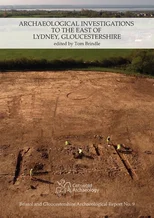
Evolution of a Romano-British Courtyard Villa
Excavations at the former Dings Crusaders Rugby Ground, Stoke Gifford 2016–2018
(Author) Tom BrindleAn archaeological excavation carried out between 2016 and 2018 at the former Dings Crusaders Rugby Football Club in Stoke Gifford revealed the ground plan of a Romano-British courtyard villa. Commencing in the 1st century AD as a roundhouse with field enclosures, it was re-built in the 2nd century as a complex of timber-framed rectangular buildings. By the end of the 3rd century, the field enclosures had been replaced by a new rectangular building with masonry foundations creating a 'row' or 'cottage'-type structure. Refurbishment and expansion followed during the 4th century. Wings were added to the house, a small bath suite and underfloor heating inserted, and a portico constructed which opened onto a courtyard flanked by ancillary buildings, achieving a courtyard villa plan. Finds from the site suggest mundane activities as well as higher-status living, attesting to local and regional links, and contacts to the wider world. Dings is one of just a few villas to have been fully excavated in recent times. It is an example of a settlement with origins at the beginning of the Roman period that developed with Roman-style architecture and evolved to become a villa of some pretension. Whilst not of the most lavish type, its history speaks of the variety and development of Roman villas in Britain.
Tom Brindle
Other related