
Panzerjager vs KV-1
Eastern Front 1941–43
(Author) Robert ForczykAs the Wehrmacht invaded the Soviet Union, it discovered that the Russians possessed heavy tanks that German anti-tank guns were ineffective against. The German Army developed the 37-mm Pak 36 in 1936 to provide the primary weapon for its panzerjagers, who were responsible for anti-tank defense in infantry divisions. Realizing that the new Wehrmacht offensive doctrines intended to fully exploit the shock effect, firepower and mobility of armor, the panzerjagers were intended to enable German infantry to fend off enemy tanks. Although the Pak 36 was adequate against most pre-war tanks, during the 1940 Campaign in the West it proved unable to defeat the British Matilda II or French Char B, so the Wehrmacht began developing the 50-mm Pak 38 to supersede it. However, the process of re-equipment was slow and most German infantry divisions that participated in the invasion of the Soviet Union in 1941 only had a handful of Pak 38s and still relied mainly on the Pak 36. Just four days into the invasion, German troops encountered the first KV-1 and KV-2 tanks near Raisinai in Lithuania and the impotence of both the Pak 36 (soon derisively labeled the "Door Knocker") and the Pak 38 was revealed. Thus at the start of this decisive campaign, the German Army was faced with the reality that it's panzerjagers could not provide effective anti-tank defense against Soviet heavy tanks and the Wehrmacht was forced to adopt a crash-program to upgrade its division-level AT defenses. New weaponry, including the 75-mm Pak 40, captured Soviet 76.2-mm guns converted into Pak 36(r), HEAT shells and tungsten-core rounds, offered possible solutions to the Soviet armored behemoths, but would require time to develop. In the interim, the panzerjagers were forced to adopt a variety of ad hoc tactics and stand-in equipment to survive in an unequal duel with heavy Soviet tanks. On the Soviet side, based upon lessons from the Spanish Civil War, the Red Army decided to develop a heavy "breakthrough" tank to smash enemy infantry defenses. The result was the KV-1 and KV-2 tanks, introduced in 1939. At the start of Operation Barbarossa, both these tanks were virtually invulnerable to the weapons of the panzerjager and demonstrated their ability to overrun German infantry on several occasions. This advantage gave the Red Army a window of opportunity between the fall of 1941 and the spring of 1942 to use their heavy tanks to repel the German invasion in a series of desperate counteroffensives. Yet the window of Soviet advantage was a narrow one and the duel between the Soviet KV heavy tanks and German panzerjagers had a major impact upon the struggle for the strategic initiative in 1941-42.
Robert Forczyk
Robert Forczyk is a military historian and author known for his critically acclaimed work "Where the Iron Crosses Grow." His writing style is detailed and analytical, providing deep insights into military campaigns. Forczyk's key contributions to literature include shedding light on lesser-known aspects of World War II.
Other related
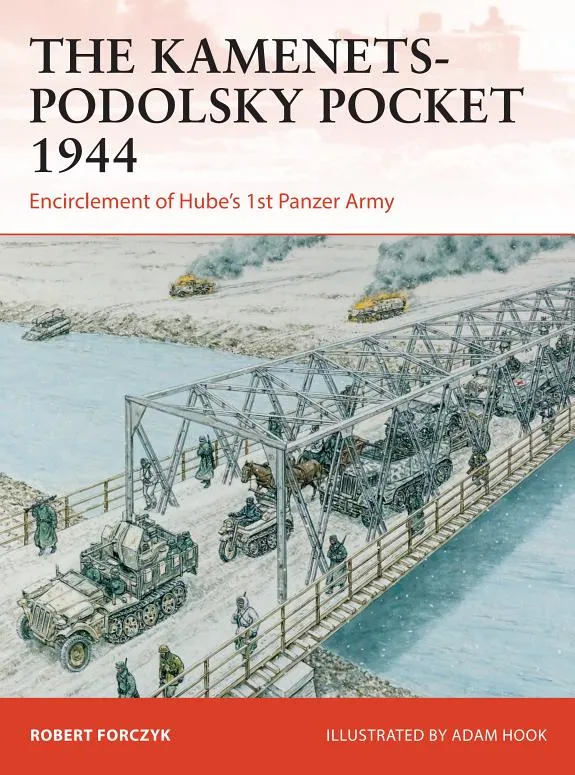
The Kamenets-Podolsky Pocket 1944
Encirclement of Hube’s 1st Panzer Army
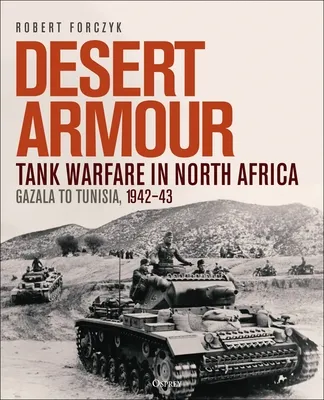
Desert Armour
Tank Warfare in North Africa: Gazala to Tunisia, 1942–43
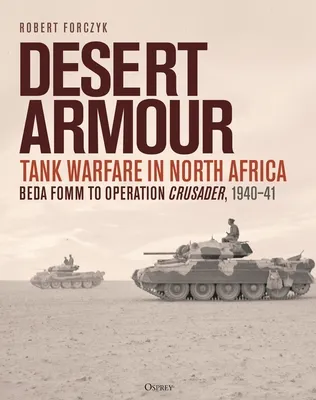
Desert Armour
Tank Warfare in North Africa: Beda Fomm to Operation Crusader, 1940–41

