Hotel Savoy
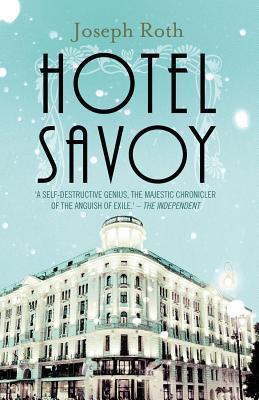
(Author) Joseph RothA critically acclaimed early work from the author of The Radetzky March--one of the most significant literary German novels ever written After the end of World War I, Gabriel Dan is released from a POW camp in Russia and begins making his way home to Austria. He comes to an industrial town in Poland, and checks in the ramshackle Hotel Savoy while awaiting financial aid from his family. Here he meets a kaleidoscope of characters, a microcosm of society in which rich and poor, itinerants, dissidents, and malcontents live lives of hope, expectancy, and despair in an atmosphere pregnant with revolutionary fervor.
Joseph Roth
Joseph Roth was an Austrian journalist and novelist known for his poignant and lyrical writing style. He was a prominent figure in the European literary scene during the early 20th century. Some of his most notable works include "The Radetzky March," "Job," and "The Emperor's Tomb." Roth's works often explore themes of nostalgia, displacement, and the decline of the Austro-Hungarian Empire. His writing is characterized by its vivid descriptions, rich character development, and emotional depth. Roth's influence on the literary genre of historical fiction and his ability to capture the human experience in times of political turmoil have solidified his legacy as one of the most important writers of his time. His most famous work, "The Radetzky March," remains a classic of European literature and a testament to Roth's enduring impact on the literary world.
Other related