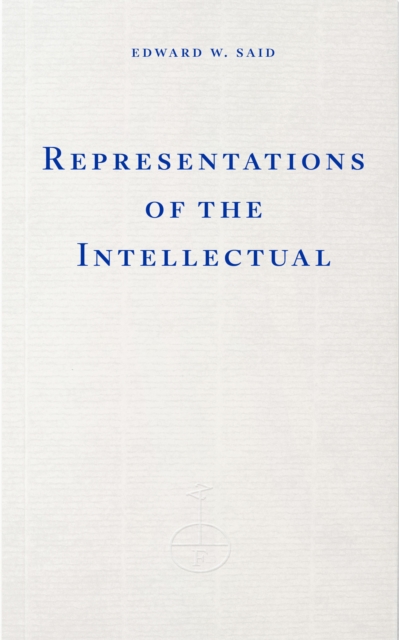
Representations of the Intellectual
(Author) Edward W. SaidAre intellectuals merely the servants of special interests or do they have a larger responsibility? In these wide-ranging essays, one of our most brilliant and fiercely independent public thinkers addresses this question with extraordinary eloquence. Said sees the intellectual as an exile and amateur whose role it is 'to speak the truth to power' even at the risk of ostracism or imprisonment. Drawing on the examples of Jonathan Swift and Theodor Adorno, Robert Oppenheimer and Henry Kissinger, Vietnam and the Gulf War, Said explores the implications of this idea and shows what happens when intellectuals succumb to the lures of money, power, or specialization.
Edward W. Said
Edward W. Said (1935-2003) was a Palestinian-American literary theorist, critic, and scholar known for his groundbreaking work in post-colonial theory and cultural studies. His most notable works include "Orientalism" (1978), in which he critiques Western representations of the Middle East, and "Culture and Imperialism" (1993), which explores the relationship between culture and power in colonial contexts.
Said's writing style is characterized by its eloquence, depth of analysis, and commitment to challenging dominant narratives and structures of power. He was a pioneering figure in the field of post-colonial studies, and his work has had a profound impact on literary theory, cultural studies, and the understanding of colonialism and imperialism.
His most famous work, "Orientalism," remains a seminal text in the field, and continues to be widely studied and debated in academic circles. Said's contributions to literature and cultural studies have left a lasting legacy, inspiring generations of scholars to critically engage with issues of representation, identity, and power in the post-colonial world.
Other related



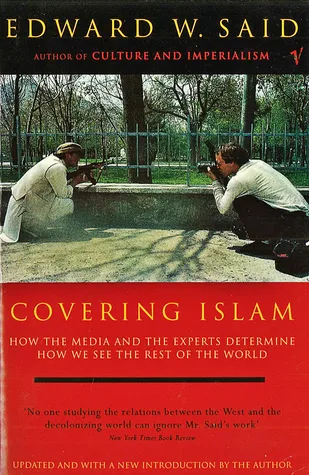
Covering Islam
How the Media and the Experts Determine How We See the Rest of the World (Fully Revised Edition)



Saint Petersburg
Sacrifice and Redemption in the City That Defied Hitler