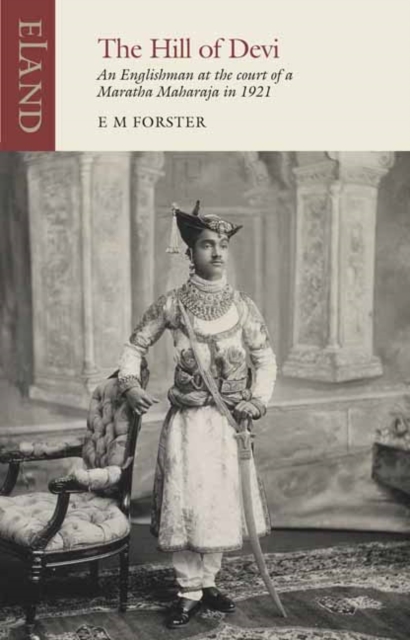
The Hill of Devi
An Englishman serving at the Court of a Maharaja
(Author) E.M. ForsterThe novelist E. M. Forster opens the door on life in a remote Maharajah's court in the early twentieth century, a "record of a vanished civilization." Through letters from his time visiting and working there, he introduces us to a 14th century political system in "the oddest corner of the world outside Alice in Wonderland" where the young Maharajah of Devas, "certainly a genius and possibly a saint," led a state centered on spiritual aspirations. The Hill of Devi chronicles Forster's infatuation and exasperation, fascination, and amusement at this idiosyncratic court, leading us with him to its heart and the eight-day festival of Gokul Ashtami, marking the birth of Krishna, where we see His Highness Maharajah Sir Tukoji Rao III dancing before the altar "like David before the Ark."
E.M. Forster
E.M. Forster was a British novelist and essayist known for his insightful social commentary and exploration of human relationships. His most notable works include "A Passage to India," "Howards End," and "A Room with a View." Forster's writing style is characterized by its clarity, wit, and empathy towards his characters. He is credited with pioneering the psychological novel and challenging traditional British social norms. "A Passage to India" is considered his masterpiece, tackling themes of colonialism, race, and cultural misunderstanding. Forster's works continue to be celebrated for their timeless relevance and profound exploration of human nature.
Other related


Penguin Readers Level 4
A Room with a View (ELT Graded Reader) : Abridged Edition