Virtual EI (HBR Emotional Intelligence Series)
(Author) Harvard Business ReviewRead the room—and the Zoom. Just because a global pandemic forced us all to log more hours in virtual meetings and engage in more Slack conversations doesn't mean we're good at them. We've all endured the uncertainty of knowing who should talk first when several of us start at once. Or logging in to a call with a full mosaic of faces but no one speaking. How do you allow folks to dissent or share a hard perspective? If someone appears confused, do you call them on it or message them privately? And if we found those scenarios challenging when we were all remote, how can we manage our teams and facilitate effective meetings when some of us are on-site and some are on-screen? How do we navigate a hybrid workforce? How do we build relationships and trust when some colleagues share a long history and others have never laid eyes on one another in real life? This book explores how to develop, practice, and demonstrate your emotional intelligence and social skills in a virtual or hybrid setting. With the latest psychological research and practical advice from leading experts, you'll learn how to make everyone feel heard, draw everyone's voice into the conversation, and make real connections—whether your people are in a conference room or a breakout room. How to be human at work. The HBR Emotional Intelligence Series features smart, essential reading on the human side of professional life from the pages of Harvard Business Review. Each book in the series offers proven research showing how our emotions impact our work lives, practical advice for managing difficult people and situations, and inspiring essays on what it means to tend to our emotional well-being at work. Uplifting and practical, these books describe the social skills that are critical for ambitious professionals to master.
Harvard Business Review
Harvard Business Review is a prestigious publication known for its insightful articles on management, leadership, and business strategy. Founded in 1922, HBR has published groundbreaking research and analysis by leading experts in the field.
One of HBR's most notable works is the article "Marketing Myopia" by Theodore Levitt, which introduced the concept of focusing on customer needs and wants rather than products. This article has had a significant impact on the marketing industry and is still widely cited today.
HBR's literary style is clear, concise, and data-driven, making complex business concepts accessible to a wide audience. Their contributions to literature include pioneering research on topics such as innovation, organizational culture, and decision-making.
Overall, Harvard Business Review has had a profound influence on the business world and continues to be a leading source of knowledge and insights for professionals in all industries.
Other related
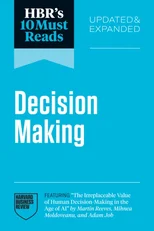
HBR's 10 Must Reads on Decision-Making, Updated and Expanded
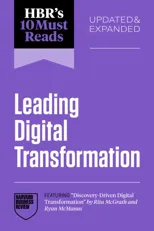
Hbr's 10 Must Reads on Leading Digital Transformation, Updated and Expanded (Featuring Discovery-Driven Digital Transformation by Rita McGrath and Rya
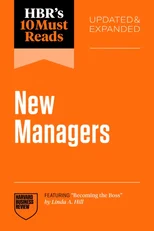
HBR's 10 Must Reads for New Managers, Updated and Expanded (featuring "Becoming the Boss" by Linda A. Hill)
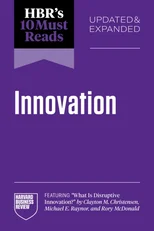
HBR's 10 Must Reads on Innovation, Updated & Expanded (featuring "What Is Disruptive Innovation?" by Clayton M. Christensen, Michael E. Raynor, and Rory McDonald)



Mental Load Diaries
How I learned to juggle life, love and the neverending to-do list

The Other Side of Change
Who We Become When Life Makes Other Plans

What Are You Thirsty For?
Rethinking alcohol and the life you want