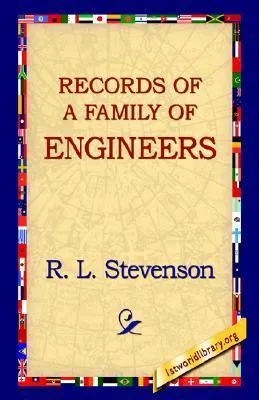
Records of a Family of Engineers
(Author) Robert Louis StevensonFrom the thirteenth century onwards, the name, under the various disguises of Stevinstoun, Stevensoun, Stevensonne, Stenesone, and Stewinsoune, spread across Scotland from the mouth of the Firth of Forth to the mouth of the Firth of Clyde. Four times at least it occurs as a place-name. There is a parish of Stevenston in Cunningham; a second place of the name in the Barony of Bothwell in Lanark; a third on Lyne, above Drochil Castle; the fourth on the Tyne, near Traprain Law. Stevenson of Stevenson (co. Lanark) swore fealty to Edward I in 1296, and the last of that family died after the Restoration. Stevensons of Hirdmanshiels, in Midlothian, rode in the Bishops' Raid of Aberlady, served as jurors, stood bail for neighbours - Hunter of Polwood, for instance - and became extinct about the same period, or possibly earlier. A Stevenson of Luthrie and another of Pitroddie make their bows, give their names, and vanish. And by the year 1700 it does not appear that any acre of Scots land was vested in any Stevenson.
Robert Louis Stevenson
Robert Louis Stevenson was a Scottish novelist, poet, and essayist, known for his adventurous and imaginative storytelling. His most notable works include "Treasure Island," "Strange Case of Dr Jekyll and Mr Hyde," and "Kidnapped." Stevenson's writing style is characterized by vivid descriptions, well-crafted plots, and a keen sense of suspense.
Stevenson made significant contributions to the genres of adventure fiction and Gothic literature, with his works exploring themes of duality, identity, and the human psyche. His most famous work, "Treasure Island," is a classic tale of pirates, treasure hunts, and moral ambiguity that has captivated readers of all ages for generations.
Overall, Robert Louis Stevenson's impact on literature is undeniable, as his works continue to be celebrated for their enduring appeal, timeless themes, and masterful storytelling.
Other related