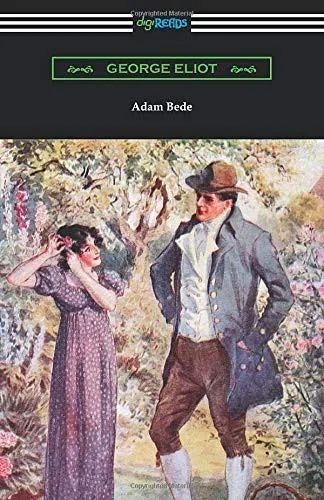
Adam Bede
(Author) George EliotOriginally published in 1859, "Adam Bede" is the first novel by George Eliot, which was the pen name of Mary Ann Evans. Eliot was one of the leading British writers of the Victorian era, as well as a noted journalist, poet, and translator. "Adam Bede" concerns a small, tight-knit, and fictional rural community called Hayslope and the romantic drama that develops between four of its young residents: the title character Adam, a young carpenter, the beautiful young Hetty Sorrel, Captain Arthur Donnithorne, a young squire, and Hetty's cousin, the virtuous Methodist lay preacher, Dinah Morris. Adam, respected for his intelligence and integrity, has fallen in love with Hetty, who in turn has fallen in love with Arthur, the local squire's charismatic grandson and heir. Adam discovers that Hetty and Arthur have been meeting in secret and uses this knowledge to force his rival to leave town. However, before Hetty and Adam can wed, Hetty discovers herself to be pregnant and a series of bad decisions results in tragic consequences. A classic of 19th century literature, "Adam Bede", a popular choice in English literature courses, remains a classic tale of love, desperation, and redemption. This edition is printed on premium acid-free paper.
George Eliot
George Eliot was the pen name of Mary Ann Evans, a prominent Victorian-era novelist known for her insightful and complex characterizations. Her most notable works include "Middlemarch," considered one of the greatest novels in the English language, and "Silas Marner," a poignant tale of redemption and community. Eliot's literary style is characterized by its psychological depth, moral complexity, and social commentary. She was a pioneer in the realist tradition, exploring themes of morality, religion, and human relationships in her writing. Eliot's contributions to literature include challenging traditional gender roles and societal norms, as well as expanding the scope and depth of the novel as an art form. Her work continues to be celebrated for its profound insights into the human condition and its enduring relevance in contemporary society.
Other related
Penguin Readers Level 4
The Mill on the Floss (ELT Graded Reader) : Abridged Edition
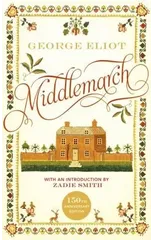
Middlemarch
The 150th Anniversary Edition introduced by Zadie Smith