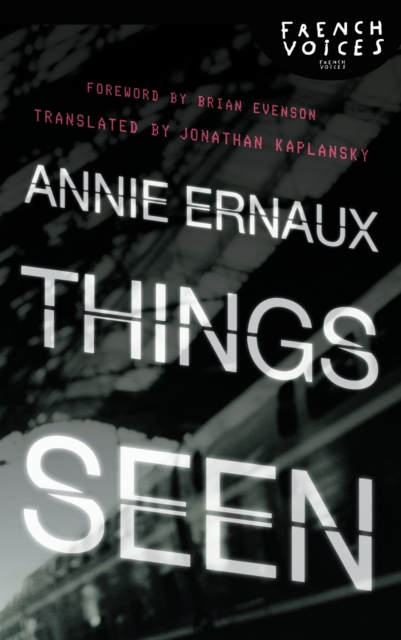
Things Seen
(Author) Annie Ernaux“Annie Ernaux’s work,” wrote Richard Bernstein in the New York Times, “represents a severely pared-down Proustianism, a testament to the persistent, haunting and melancholy quality of memory.” In the New York Times Book Review, Kathryn Harrison concurred: “Keen language and unwavering focus allow her to penetrate deep, to reveal pulses of love, desire, remorse.” In this “journal” Ernaux turns her penetrating focus on those points in life where the everyday and the extraordinary intersect, where “things seen” reflect a private life meeting the larger world. From the war crimes tribunal in Bosnia to social issues such as poverty and AIDS; from the state of Iraq to the world’s contrasting reactions to Princess Diana’s death and the starkly brutal political murders that occurred at the same time; from a tear-gas attack on the subway to minute interactions with a clerk in a store: Ernaux’s thought-provoking observations map the world’s fleeting and lasting impressions on the shape of inner life.
Annie Ernaux
Annie Ernaux is a renowned French author known for her autobiographical novels that explore themes of memory, identity, and social class. Her most notable works include "The Years" and "A Man's Place," which blend personal reflection with sociological analysis. Ernaux's writing style is characterized by its honesty, clarity, and precise attention to detail. She has been praised for her ability to capture the complexities of human experience and the passage of time. Ernaux's impact on the literary genre of autobiographical writing is significant, as she has pushed boundaries and challenged traditional notions of memoir. "The Years" is considered her most famous work, garnering critical acclaim and numerous awards for its powerful portrayal of a woman's life in post-war France. Overall, Annie Ernaux's contributions to literature have cemented her reputation as a masterful storyteller and a leading voice in contemporary French literature.
Other related

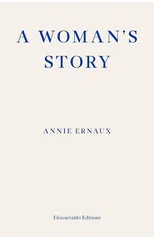
A Woman's Story – WINNER OF THE 2022 NOBEL PRIZE IN LITERATURE