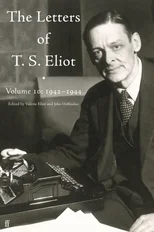
The Letters of T. S. Eliot Volume 2
1923-1925
(Author) T.S. EliotVolume Two covers the early years of his editorship of The Criterion (the periodical that Eliot launched with Lady Rothermere’s backing in 1922), publication of The Hollow Men and the course of Eliot’s thinking about poetry and poetics after The Waste Land. The correspondence charts Eliot’s intellectual journey towards conversion to the Anglican faith in 1927, as well as his transformation from banker to publisher, ending with his appointment as a director of the new publishing house of Faber & Gwyer, in late 1925, and the appearance of Poems 19091925, Eliot’s first publication with the house with which he would be associated for the rest of his life. It was partly because of Eliot’s profoundly influential work as cultural commentator and editor that the correspondence is so prolific and so various, and Volume Two of the Letters fully demonstrates the emerging continuities between poet, essayist, editor and letter-writer.
T.S. Eliot
T.S. Eliot (1888-1965) was a highly influential poet, essayist, and playwright of the 20th century. His most notable works include "The Love Song of J. Alfred Prufrock," "The Waste Land," and "Four Quartets." Eliot's literary style was characterized by its complexity, symbolism, and exploration of themes such as identity, alienation, and the search for meaning in a fragmented world. He is credited with revolutionizing modern poetry through his innovative use of language, form, and imagery. Eliot's impact on the literary genre of modernism is profound, as he challenged traditional poetic conventions and paved the way for future generations of poets to experiment and push boundaries. His most famous work, "The Waste Land," is considered a landmark in 20th-century literature for its exploration of the disillusionment and despair of post-World War I society. Eliot's contributions to literature continue to be celebrated and studied for their enduring relevance and influence on the literary canon.
Other related