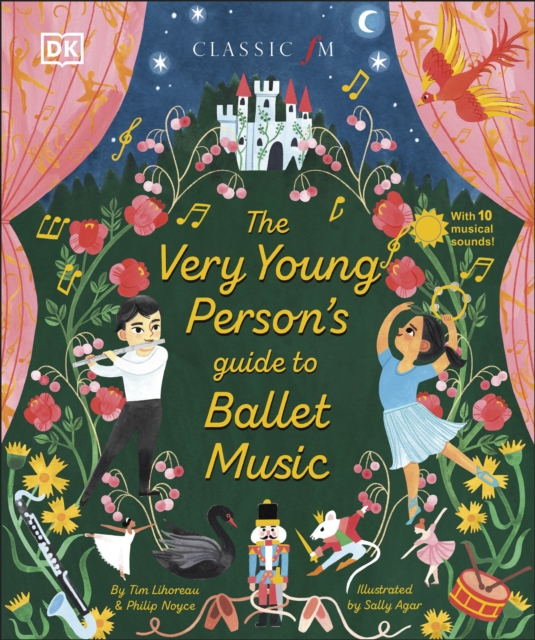
The Very Young Person's Guide to Ballet Music
(Author) Tim LihoreauDiscover the world's most famous ballets, including Swan Lake, Don Quixote, The Nutcracker, Spartacus, and The Firebird accompanied by 10 sound clips of child-friendly pieces. "The perfect way to discover the stories behind famous ballets and introduce the melodies to your children. Simply adorable." Myleene Klass Learn about the music and stories of ballet in the second book of The Very Young Person's Guide To... series. Pull on your pointe shoes and follow our heroes as they explore beautiful scenes inspired by some of ballet's most loved music, including Swan Lake, Giselle, The Nutcracker, Spartacus, and The Firebird. Young readers can discover iconic moments including Swan Lake's Dance of the Cygnets, The Clog Dance from La Fille Mal Gardée, and Don Quixote's Dance of the Matadors. Original illustrations capture the beautiful story of the ballet, while the sound button brings the composer's dazzling pieces to life. Every spread features fascinating facts about the ballet, performers, the composer, and the music. Ideal for young children starting music and dance lessons, The Very Young Person's Guide to Ballet Music is guaranteed to delight and inspire.
Tim Lihoreau
Tim Lihoreau is a British writer known for his witty and engaging style of writing. He has written several popular books on music and culture, including "Classic FM's More Music Breakfast Book" and "The Classic FM Friendly Guide to Music." Lihoreau's work is characterized by his deep knowledge of classical music and his ability to make it accessible to a wide audience. His contributions to literature include shedding light on the world of classical music and sparking interest in the genre among readers. His most famous work is "Classic FM's More Music Breakfast Book," which has been praised for its insightful commentary and entertaining anecdotes. Lihoreau's impact on the literary genre of music writing is significant, as he has helped to bridge the gap between classical music and popular culture.
Other related