
George III (Penguin Monarchs)
Madness and Majesty
(Author) Black Jeremy Jeremy BlackKing of Britain for sixty years and the last king of what would become the United States, George III inspired both hatred and loyalty and is now best known for two reasons: as a villainous tyrant for America's Founding Fathers, and for his madness, both of which have been portrayed on stage and screen. In this concise and penetrating biography, Jeremy Black turns away from the image-making and back to the archives, and instead locates George's life within his age: as a king who faced the loss of key colonies, rebellion in Ireland, insurrection in London, constitutional crisis in Britain and an existential threat from Revolutionary France as part of modern Britain's longest period of war. Black shows how George III rose to these challenges with fortitude and helped settle parliamentary monarchy as an effective governmental system, eventually becoming the most popular monarch for well over a century. He also shows us a talented and curious individual, committed to music, art, architecture and science, who took the duties of monarchy seriously, from reviewing death penalties to trying to control his often wayward children even as his own mental health failed, and became Britain's longest reigning king.
Black Jeremy
Jeremy Black
Jeremy Black is a prominent British historian, known for his prolific contributions to military, diplomatic, and global history. He has authored over 100 books, including "War: A Short History" and "Rethinking Military History." Black's writing style is characterized by meticulous research, engaging storytelling, and insightful analysis.
Black's work has had a significant impact on the field of military history, challenging traditional narratives and offering new perspectives on key historical events. His most famous work, "War: A Short History," provides a comprehensive overview of warfare throughout human history, exploring its causes, consequences, and evolving nature.
Overall, Jeremy Black's extensive body of work has solidified his reputation as a leading authority in historical scholarship, making him a respected figure in the academic community and beyond.
Other related




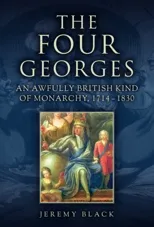
The Four Georges
An Awfully British Kind of Monarchy, 1714-1830
